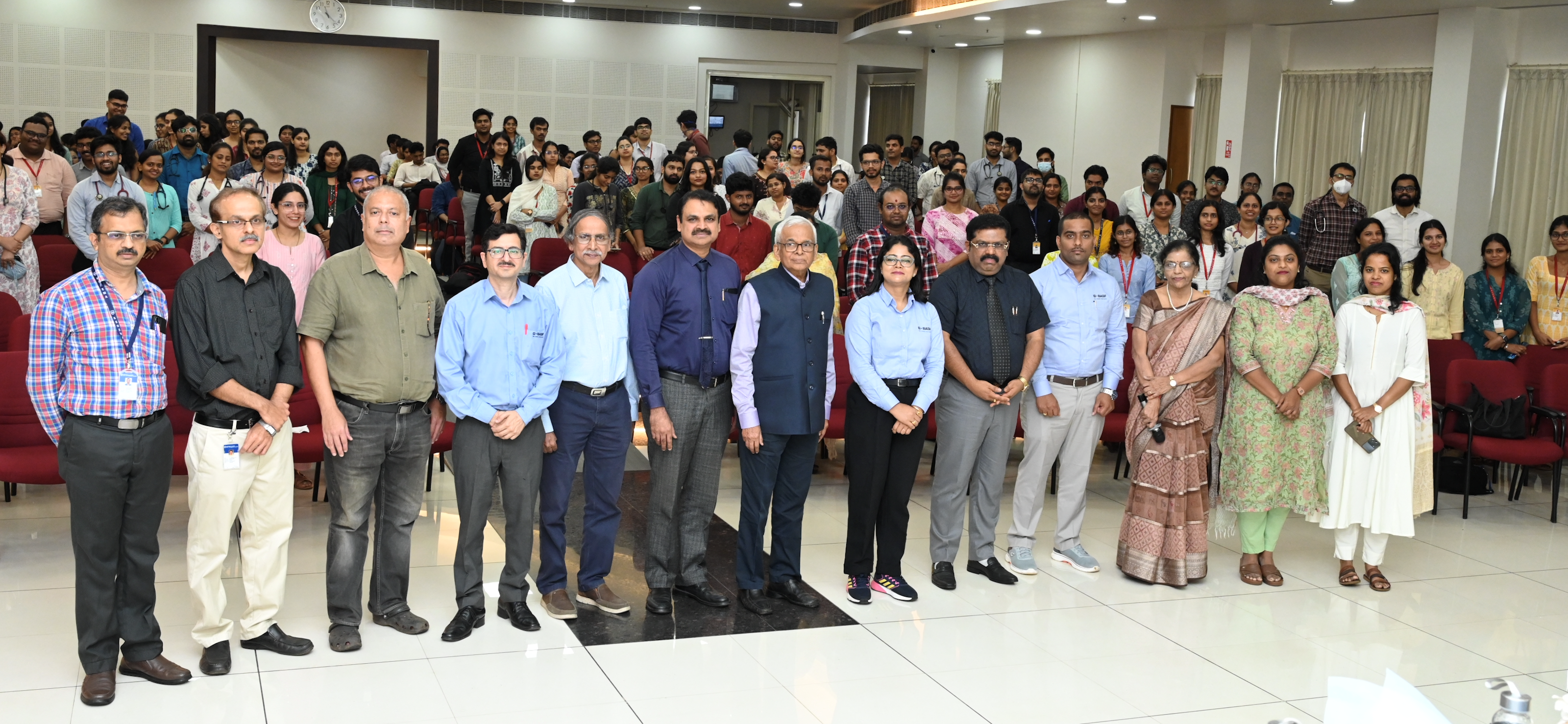
Expert lecture by Dr Debabrata Kanungo on Diagnosis, treatment and management of accidental poisoning with agrochemicals

About
DST TEC, in association with K S Hegde Medical Academy and BASF India Ltd., organized an expert lecture on 3 July 2025 at Avishkar Hall, 7th floor, A B Shetty Memorial Institute of Dental Sciences, Mangaluru. The chief guest of the program was Dr Debabrata Kanungo, Former Additional Director General of the Ministry of Health and Family Welfare, Government of India, and Dr Sandeep Rai, Dean, K S Hegde Medical Academy, NitteDU, presided over the event.
Dr Indrani Karunasagar, Director- DST TEC & Projects, delivered the opening remarks and welcomed the gathering. Mr Yuvraj Chopra, Country Advocacy Lead, Agri Solutions, BASF India Ltd., addressed the gathering and thanked Dr Kanungo for leading BASF India Ltd to make the association with NitteDU possible. Ms Gunjan Mehta, Marketing Excellence & Sustainability Lead, Agri Solutions, BASF India Ltd., introduced BASF to the gathering using a brief presentation and detailed about various product sectors in which the company is involved in and the farmer connection programme “Hamesha Suraksha” which creates awareness among the users of agricultural pesticides about safe use.
Dr Iddya Karunasagar, Advisor- Research & Patents, NitteDU, introduced the chief guest, Dr Kanungo, focusing on how he has been actively involved in policy making, and guiding many government and international organizations such as Joint FAO/WHO Meeting on Pesticide Residues. The president of the event, Dr Sandeep Rai, highlighted the importance of creating awareness among medical professionals about diagnosis and management of accidental poisoning. Dr. Sudhindra Rao, Head of Department of General Medicine, KSHEMA proposed the vote of thanks.
This was then followed by the expert talk by the chief guest, wherein he initiated the session by outlining the increased prevalence of accidental and occupational exposure to agrochemicals, particularly in agricultural communities. He elaborated on the different classes of agrochemicals, including organophosphates, carbamates, pyrethroids, etc. He detailed the major routes of exposure, such as inhalation, ingestion, and dermal contact, and included several case studies to demonstrate the context in which poisoning typically occurs. Dr. Kanungo emphasized the importance of early recognition of clinical signs such as nausea, vomiting, sweating, muscle twitching, respiratory distress, and altered mental status. He discussed differential diagnosis and the use of toxicological history and laboratory investigations for accurate diagnosis. He advised medical practitioners to work on treating the patient rather than the poison.
About 280 participants, including representatives from BASF, medical students, postgraduates and practitioners, attended the expert talk. The session provided comprehensive insights into the medical, operational, and policy dimensions of managing agrochemical poisoning. The session proved to be highly beneficial in enhancing the preparedness and competence of attendees to address this public health concern. This also emphasized the need for multi-sectoral collaboration to improve safety and outcomes in agrochemical handling and exposure.
News Date : 2025-07-17
Last updated 2025-07-17 04:39:09