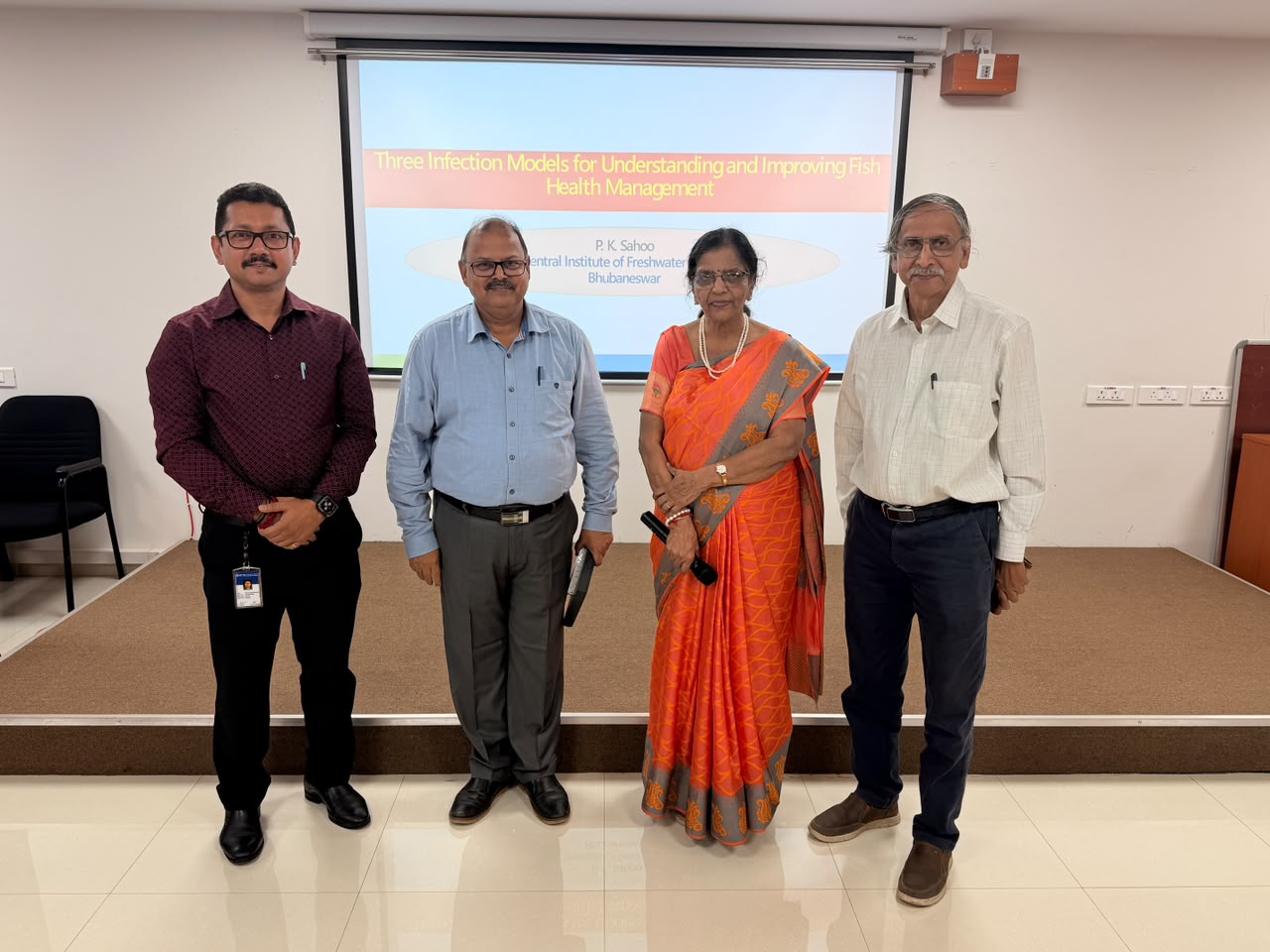
Guest Lecture by Dr. Pramoda K. Sahoo

About
The DST Nitte University Technology Enabling Centre (DSTNUTEC), FAO Reference Centre for Antimicrobial Resistance and Aquaculture Biosecurity, Nitte (Deemed to be University), and Nitte University Centre for Science Education and Research (NUCSER) jointly organized a guest lecture by Prof. Dr. Pramoda K Sahoo, Former National Professor, Director, ICAR-Central Institute of Freshwater Aquaculture (ICAR-CIFA), Bhubaneshwar, on ‘Three Infection Models for Understanding and Improving Fish Health Management’. The guest lecture was held on 20 August 2026, at the Seminar Hall, NUCSER.
Prof. Dr. Indrani Karunasagar, Director of DSTNUTEC and Head of the FAO Reference Centre for Antimicrobial Resistance and Aquaculture Biosecurity, welcomed the gathering and introduced the speaker. The presentation began with an overview of Indian aquaculture and the factors that contribute to the occurrence and spread of fish diseases, including hosts, pathogens, environmental conditions, co-infections, and stress. One of the key topics was Argulus (fish louse), an important parasite affecting freshwater fish. Dr. Sahoo explained its impact on fish health and described the research undertaken to understand the parasite and develop better methods for its prevention and control, including herbal products and vaccine-based approaches. A major part of the presentation focused on emerging viral diseases, particularly Tilapia Lake Virus (TiLV) and Tilapia parvovirus (TiPV). The speaker shared the progress made in disease surveillance, molecular diagnostics, non-invasive sampling, and vaccine development. The findings on TiLV vaccination and the strong immune responses observed in vaccinated fish were particularly interesting and highlighted the potential of vaccination as an important tool for disease management. The final section discussed Aeromonas hydrophila, a major bacterial pathogen in freshwater fish. Dr. Sahoo described the institute’s long-term work on selective breeding, immune markers, molecular genetics, QTL mapping, and genome editing to develop fish with better disease resistance and growth performance. The work on genetically improved Jayanti Rohu was especially impressive and demonstrated how research can directly benefit farmers and aquaculture production.
Overall, the presentation gave the audience a clear understanding of the importance of combining research on disease diagnostics, vaccines, genetics, and biotechnology to address health problems in aquaculture. It was a valuable session that highlighted the significant role of research and innovation in making Indian aquaculture healthier, more productive, and more sustainable.
Prof. Dr. Iddya Karunasagar, Advisor- Research & Patents, NitteDU; and Prof. Dr. Anirban Chakraborty, Director- NUCSER, attended this informative session along with 120 participants, including students, faculty, and research scholars from NUCSER.
News Date : 2026-08-24
Last updated 2026-08-24 04:50:14